
Charlotte County Arrest Log Status
The sheriff's office posts no 72-hour, seven-day, or weekly blotter. Its Local Arrest Database is the official booking source for Charlotte County Jail. The page promises no historical window. It also never says when an entry rolls off. The CCSO Blog and the Punta Gorda Police news channel publish selected cases only. Neither one equals a full log of everyone booked.
That absence shapes how a multi-day search should run. Start with the official database, then hunt the specific record instead of a guessed date range. A person released earlier can vanish from live custody results. A live result can also change. For an arrest inside Punta Gorda, PGPD may hold the incident report while CCSO holds the jail booking record. The Charlotte County Clerk keeps the later court track. Two records can share a name yet answer different questions.
The official CCSO booking source appears in this captured view.
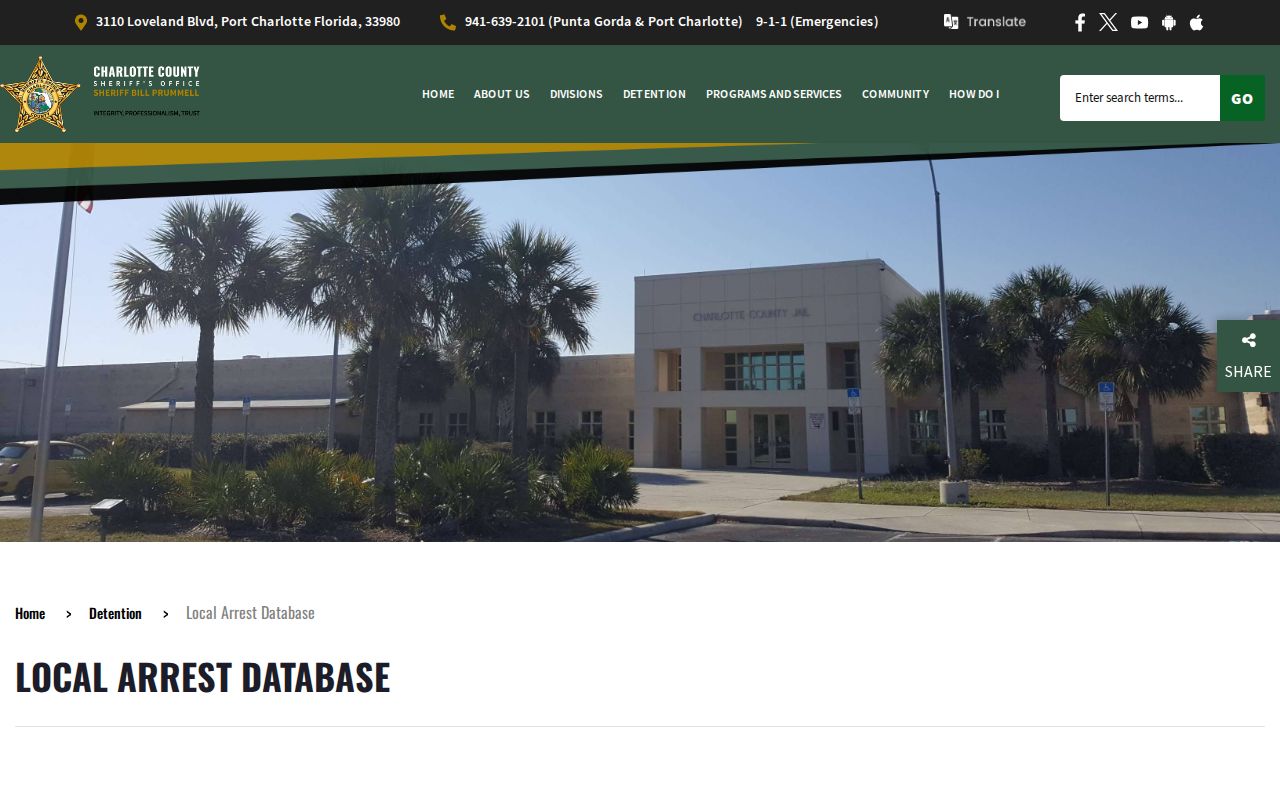
Check this live arrest log before trusting older news reports.
Read Charlotte County Arrest Records
Work backward from the newest reliable event. A booking number beats a name, since names repeat and spellings vary. Pin down what each date means. Arrest date, intake date, publication date, and story date are not the same thing. A report published days later can describe an arrest accurately yet still fail as a complete daily roster.
- Search the CCSO booking database for the name and relevant booking date.
- Check whether the live interface offers released-inmate results before treating an absence as final.
- Identify the arresting agency and request its incident report if the facts behind the arrest are needed.
- Use the Charlotte County Clerk case search to follow filings, hearings, and disposition.
- For an entry outside the web window, request the booking card or release record from CCSO Records.
The Charlotte County arrests last 24 hours page tracks fresh intake and the delay before anything appears. The blotter task runs longer. It follows records across days and into the court trail.
Charlotte County Blotter Entry Fields
Charlotte County publishes no official multi-day field list. The fields below cover core facts found in a jail entry or a retained booking record. Match each item to its source. A news story may show fewer fields. It can add narrative, while a booking packet may hold material never posted online.
| Field | Meaning and limit |
|---|---|
| Name and booking number | Identifiers for matching the person and making a precise record request. |
| Arrest and booking dates | Separate events that may occur at different times. |
| Arresting agency | CCSO, PGPD, or another authority; it is not always the jail operator. |
| Charges at booking | Charges entered during intake. |
| Bond or release data | A status that can change after first appearance or later court action. |
| Physical descriptors | Details used to distinguish records, subject to redaction and source limits. |
| Booking photo | May appear on a result; CCSO does not guarantee a photo for every public entry. |
Florida's records schedule allows more inside a booking record. Arresting and booking officers, arrest time and place, and probable-cause summaries can all be included. Release method and intake papers appear there too. Not everything gets posted online. Protected, juvenile, sealed, expunged, medical, or active-investigation details may be withheld.
The live booking host displays current entries on the county's booking search page.
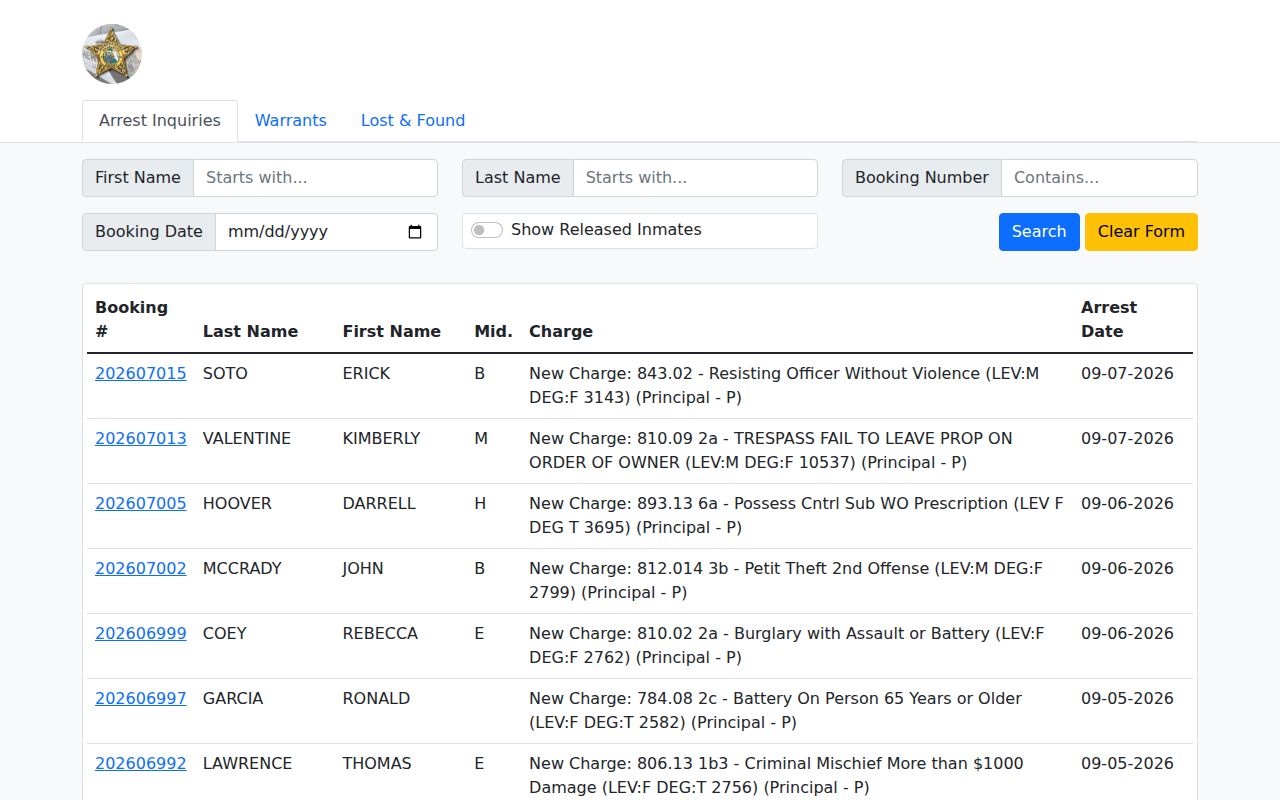
The current form, rather than an assumed template, determines which search fields are available.
Charlotte Arrest News Is Episodic
Local news adds color, not a blotter. The Charlotte Sun and Daily Sun archives carry selected arrest stories built on agency information. Gulf Coast News runs notable-case reports and photo packages. PGPD News and the CCSO Blog are selective official channels. A missing story proves nothing about a booking.
News helps when it names the arresting agency, describes an operation, or reports later developments. It can also surface after the jail event. Check the story date and source. Then confirm the booking and court file. News photos belong in their story context, not as a roster or a sheriff photo policy. The Gulf Coast News story shows one example of case-based reporting.
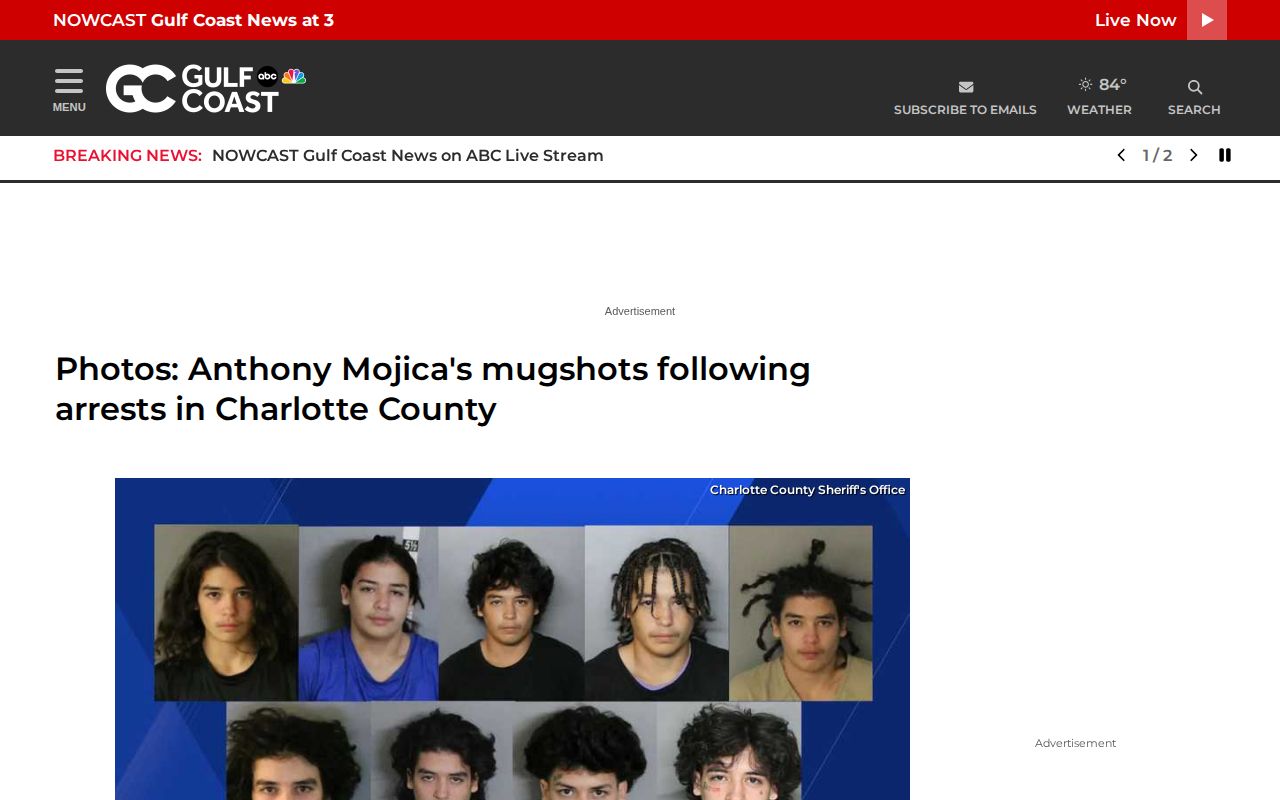
Case-based reporting is narrower than a county booking log. It can also carry later context. Unofficial archive sites go wider. They may keep date navigation, copied booking photos, and daily counts spanning months. Those sites are not county-run, so corrections can lag and stale entries linger after release. Treat them as a warning and verify any copied item with CCSO and the Clerk.
Charlotte Weekend Booking Pattern
Charlotte County Jail runs as a continuous custody operation. Booking happens at all hours, weekends and holidays included. That says nothing about online publication. Court offices and records staff work on schedules of their own. Detention never sleeps. So a weekend arrest may reach the jail system, a press release, and a court docket at three different times.
Don't call a Monday cluster a weekend surge. Agency data alone can prove that. The cluster may reflect intake volume, a web refresh, or a date filter. Log both the event date and when you checked. For live custody confirmation, call the jail at 941-833-6300. For documents, CCSO Records answers at 941-575-5251.
Note: A publication gap reflects the source's timing, not necessarily Charlotte County arrest activity in that same period.
Charlotte Booking Counts Need Context
Jail numbers in Charlotte County come with a catch. The CCSO Bureau of Detention annual report counts admissions, not people named in a blotter. For 2024 it posted 4,777 adult bookings. The total climbs to 6,016 once every tracked category is counted. Those are detention bureau figures, plain and simple. They measure who came through the jail door in Charlotte County, and nothing more.
The sheriff's annual report also covers warrants and fugitive work. Those numbers describe operations, though, not the full picture of Charlotte County arrests. Blending them into one total is a common mistake. Warrant service, jail admissions, news coverage, and current roster entries each count something different. When you track trends, pull like fields from the same report series across years. Then note which year each figure covers.
Charlotte Arrest Archives and Retention
Florida sets its own retention clock for booking records. Under General Records Schedule GS2, booking cards and commitment and release lists must stay on file for one anniversary year after release. That rule binds the agency, not the public screen. A Charlotte County arrest entry can vanish from the CCSO website well before the year is up. The underlying record still exists and remains requestable.
To request one, use the CCSO JustFOIA portal. Name the booking card, booking photo, criminal report affidavit, or release record you want. Add the person's full name and an approximate date. Include a booking number if you have it. The Clerk, not the jail, holds the final case result. If the person moved into state prison later, the Florida Department of Corrections search covers that stage. It does not cover the county archive.
- Booking record
- The jail’s intake record for a person placed in custody.
- Release list
- A facility record of people released during a stated period.
- Disposition
- The court’s recorded outcome, which can differ from the charge shown at booking.
- Retention
- The period an agency must keep a record, not the time it must remain online.
An archive is just a copy. It can lag behind what actually happened in court. For a definitive word on any Charlotte County arrest, check the official record and rely on corrections from the court itself.