
Punta Gorda Recent Arrest Process
Punta Gorda is Charlotte County's only incorporated city and its county seat. The 2020 Census counted 19,471 residents. Policing falls to the Punta Gorda Police Department. PGPD runs patrol, investigations, marine, K9, community services, communications, and records units. Those teams produce the reports for incidents inside city limits.
PGPD operates no city jail of its own. The department drives everyone it arrests to Charlotte County Jail at 26601 Airport Road. The sheriff's Bureau of Detention then handles booking, classification, custody, and release. So a single Punta Gorda arrest can leave two records. The PGPD report covers the incident. The county entry tracks custody.
The arresting agency field tells the story. A county booking may list PGPD, CCSO, another Florida agency, or a hold. Port Charlotte, Englewood, and Rotonda lie outside city limits and route through county law enforcement. None are incorporated cities. No separate municipal arrest records exist for them.
Where Punta Gorda Arrests Appear
The city posts no standing arrest roster. A public notice said Police-to-Citizen Daily Bulletin tools were running in 2025. No permanent bulletin URL is listed, though. An old P2C address is not a reliable feed. The county booking system remains the main place to check custody.
| Channel | What it provides | Status |
|---|---|---|
| CCSO Local Arrest Database | County jail booking and custody entry; a photo may appear | Official, primary booking source |
| PGPD records portal | Incident reports, arrest information, and releasable city records | Official city request source |
| PGPD News | Selected case and arrest releases | Official but episodic |
| Punta Gorda crime map | Mapped incidents with date and category filters | Useful context, not custody |
| Local news | Selected stories with agency facts and later context | Independent, incomplete coverage |
CCSO sets no fixed update time, photo rule, or online roll-off period. A fresh arrest can lag during transport and intake. A released person may vanish from the current view. For a missing booking photo or an older record, contact CCSO Records.
Find Someone Arrested in Punta Gorda
Trace the record forward. Custody comes first, then the originating police report, then the court docket, which keeps a news post or map dot from being mistaken for a full arrest history.
- Open the official CCSO Local Arrest Database and use the live booking interface.
- Search the person’s full name and compare the booking date or booking number when available.
- Check any current released-inmate control before concluding the record is absent.
- Request the city arrest or incident report from PGPD if Punta Gorda police made the arrest.
- Search the Charlotte Clerk docket for the filed case and later disposition.
Write down the booking number right away. It separates people with similar names and speeds up later requests. The arrest, intake, and posting times can all differ. A brand-new arrest may still be in transport or processing.
Give the system time. An official result may carry a photo. CCSO does not promise one for every entry, though. A blank image does not mean none was taken. Ask sheriff's Records for that specific booking photograph rather than trusting a copied one.
Punta Gorda Police Records
City records live in one place. The PGPD Records Services portal handles incident reports, traffic-enforcement material, arrest information, and other releasable documents. Supervisor Eric Burris is listed at 941-575-5508. The office sits in the Public Safety Building at 1410 Tamiami Trail, Punta Gorda, Florida 33950. Weekday hours run 8:00 a.m. to 4:30 p.m. For main and non-emergency calls, dial 941-639-4111.
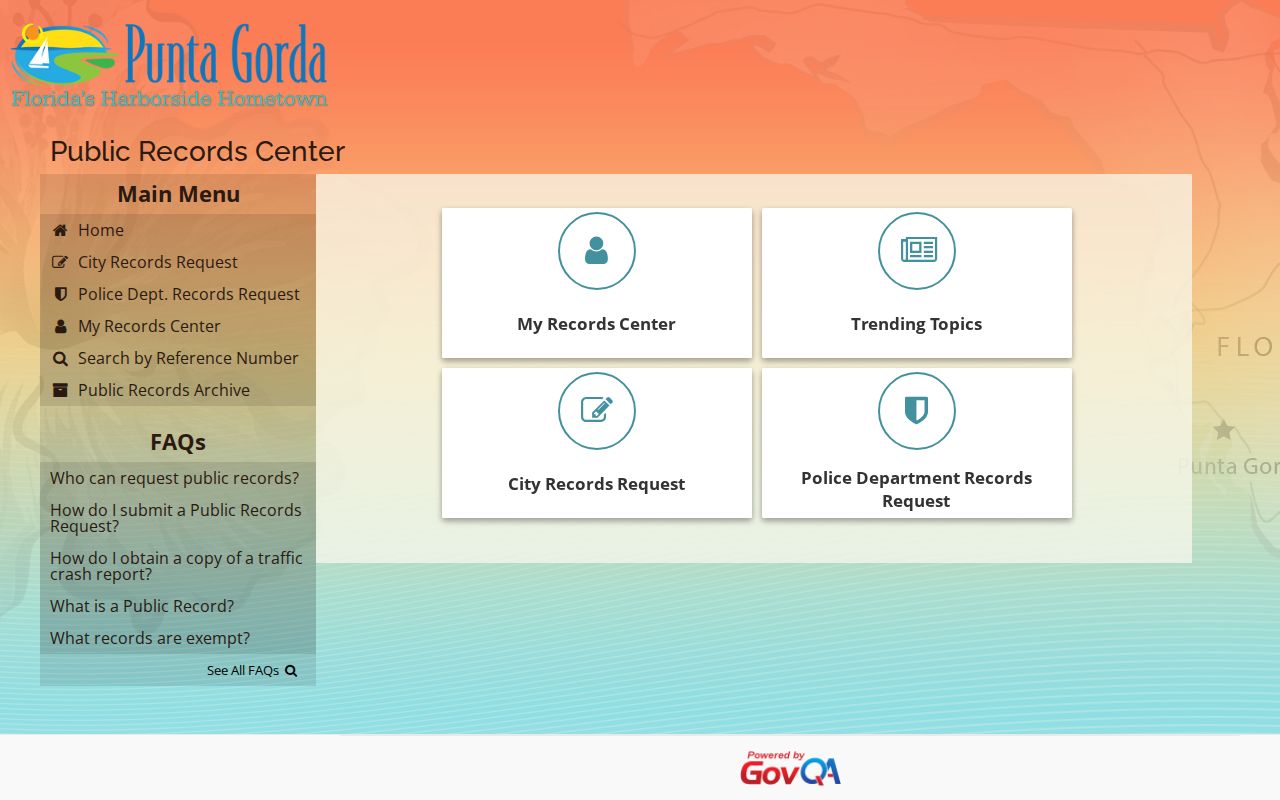
Use the portal only for city-held records. A county booking card or jail photo belongs with CCSO Records.
- Identify the person, incident or case number if known, date, and arresting agency.
- Name the exact item, such as an arrest report or releasable incident report.
- Ask for electronic delivery and an itemized estimate before added work.
- Keep the request confirmation and any exemption or redaction response.
Expect possible fees. PGPD may charge once a request passes 30 minutes of work. The rate is $6.25 per extra 15 minutes. Locating, reviewing, copying, and redacting all count toward that clock, and no photo fee or turnaround is guaranteed.
Punta Gorda Arrest Map Limits
The Punta Gorda crime map charts reported incidents with filters and date ranges. It is not an arrest roster. A dot does not mean anyone was booked. A blank spot does not mean no report exists. Nor does the map show how a case ended in court.
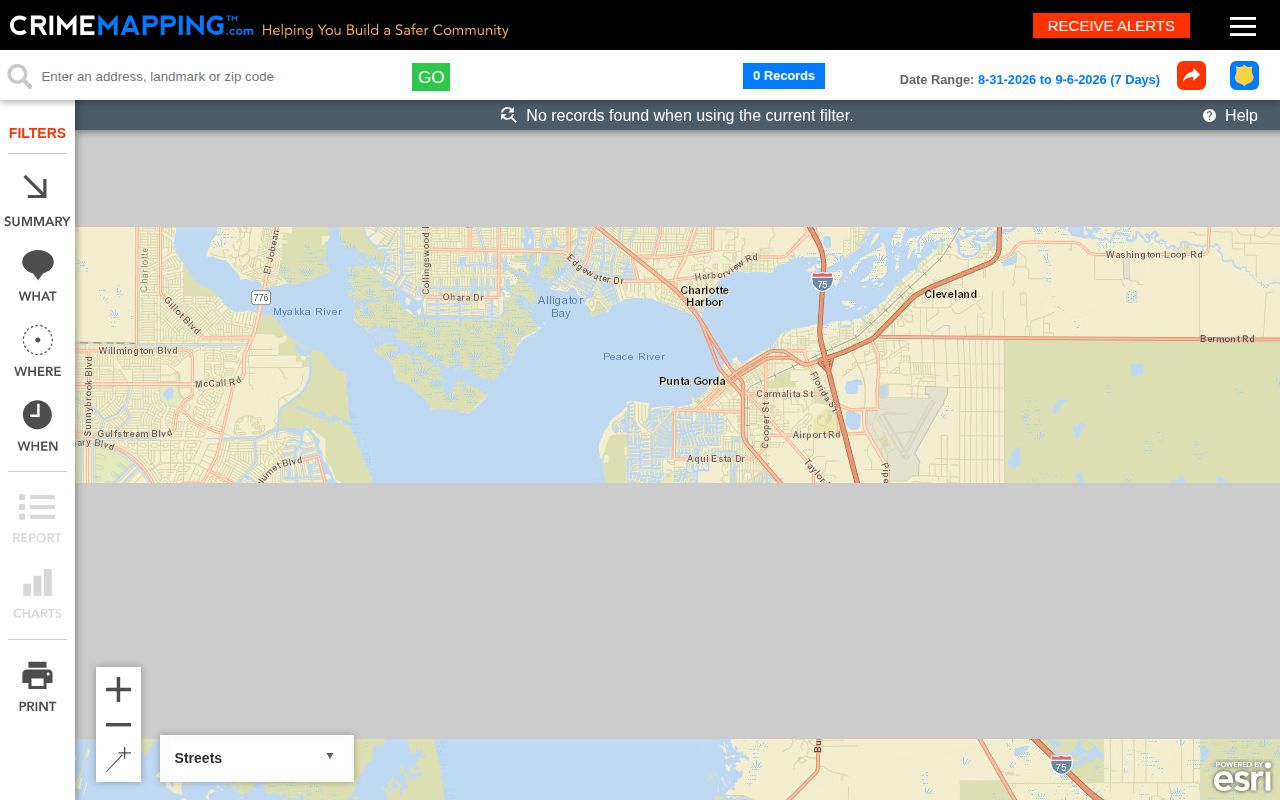
Treat map results as context only. Then confirm with custodians. The police report, county booking, and court case each have an official keeper.
The city map may show a call before booking finishes. A jail result may later surface an arrest. The arrest never became a PGPD news release. Systems update on different schedules, so one screen alone never tells the whole procedural story.
Punta Gorda Arrest News Is Selective
PGPD News works as an outreach channel, not a booking log. The department posts what it wants the public to know. That may mean a notable investigation. It may mean a public-safety alert or one selected Punta Gorda arrest. The agency's social accounts do much the same. Neither one promises coverage. A person arrested in Punta Gorda gets no guaranteed story just because the arrest happened. Local papers fill part of that gap. The Charlotte Sun and Gulf Coast News both run selected arrest coverage built on agency-supplied facts, photographs, and follow-up context. The reporting stays episodic. It adds narrative detail but cannot replace the county roster for current custody or the Clerk for case outcomes. Commercial booking aggregators also keep Charlotte County pages. Those collections may lag, repeat an error, or leave a photo up after release, so check any name, charge, or image against CCSO, PGPD, and the court file.
After a Punta Gorda Arrest
A booking page marks one moment, not a whole case. What happens next lands with the Charlotte Clerk Criminal Division. That office handles criminal traffic, misdemeanors, municipal ordinance matters, and felonies, with a docket covering filed charges, hearing dates, bond orders, pleas, dismissals, sentencing, and closure.
| Record question | Best source |
|---|---|
| What did PGPD report? | PGPD Records Services |
| Was the person booked locally? | CCSO Local Arrest Database |
| Where is the person now? | CCSO or VINELink, based on custody stage |
| What charge was filed? | Charlotte Clerk case docket |
| How did the case end? | The final court disposition |
Keep your identifiers straight. A city report number, a county booking number, and a court case number are three different things. Save each one with its source and date. That habit prevents mistaken matches and makes requests precise. Older jail entries roll off the public list. When that happens, send CCSO a narrow request through its public-records portal for the booking card, photograph, or release record by name, date, and booking number. CCSO publishes no fixed response time or standard booking-photo fee, so ask for an estimate before approving unusual service costs.
Punta Gorda Police Department Location and Directions
Public Record Search
Sponsored Results